
Tennessee Release Dates Compared
The phrase Tennessee inmate projected release date describes a common search need, but FOIL does not label any field “projected” or “tentative release date.” The Tennessee Felony Offender Information Lookup uses two main date concepts: Release Eligibility Date and Sentence End Date. The first is the point when the sentence calculation permits release or parole consideration under the controlling law. The second is the calculated expiration endpoint. They answer different questions.
A person may leave prison before the sentence-end date through parole or mandatory reentry supervision. In contrast, reaching an eligibility date does not force the gate to open. The Tennessee Board of Parole may need to hold a hearing, a release plan may need approval, and required programs may remain. FOIL also warns that dates can change after additional court documents arrive.
The FOIL detail template displays the separate eligibility, sentence, supervision, and parole fields used for state cases.
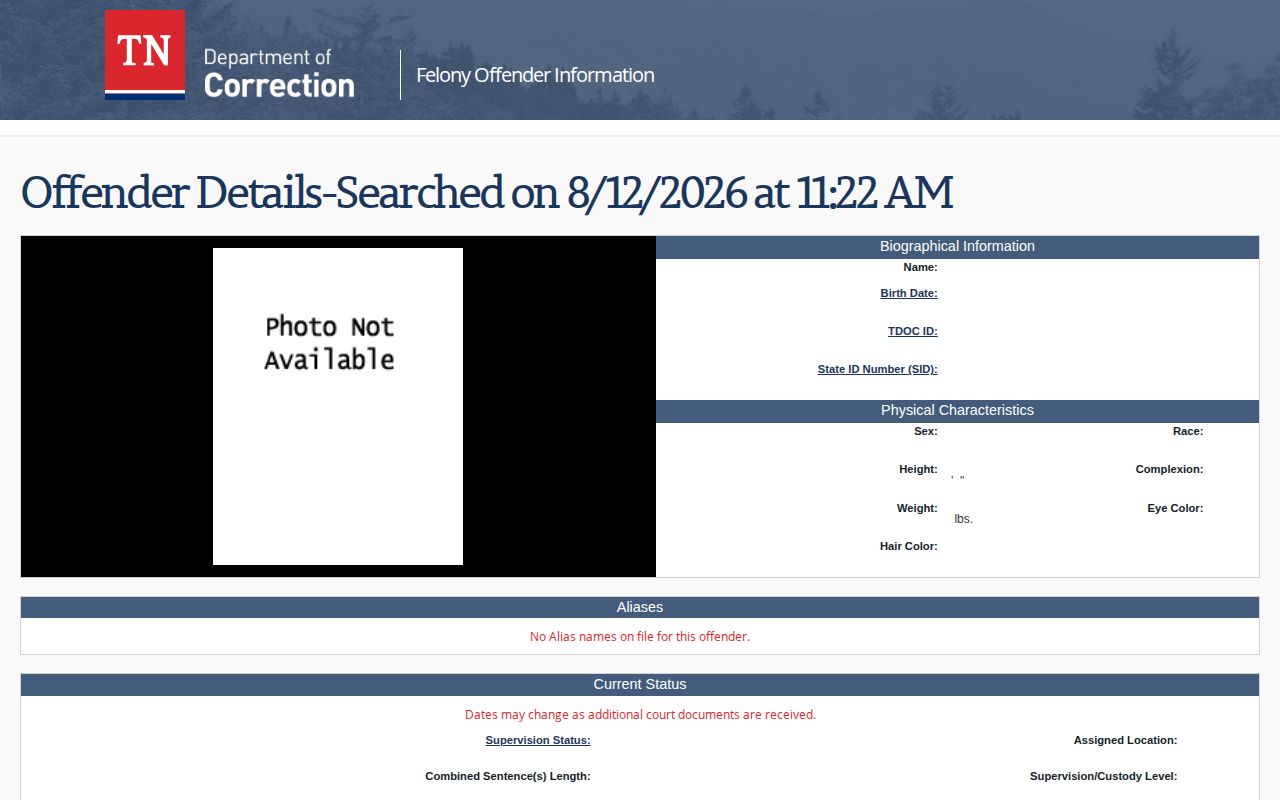
The template's structure shows why a sound date check compares the whole state record instead of copying one number.
Find a Tennessee Release Date
TDOC is Tennessee's official timekeeper for people in state custody and certifies parole eligibility to the Board. Start at the TDOC offender-search gateway, which explains that FOIL includes felony offenders currently or formerly in state custody or supervision. Search by TDOC or TOMIS number when possible. A number reduces the risk of mixing people with the same name. If only a name is known, compare date of birth, aliases, identifiers, descriptors, and photo where one appears.
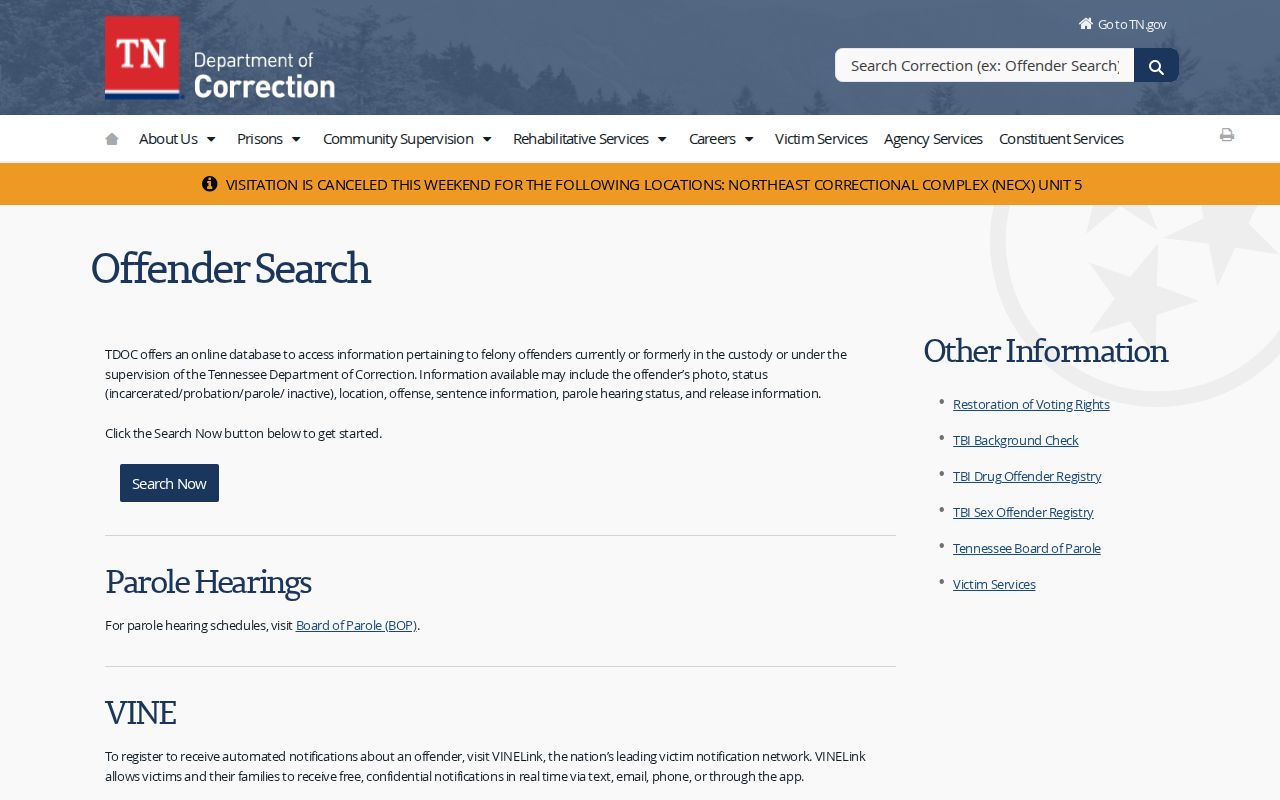
The gateway leads to FOIL and states the scope needed to interpret both current and former state cases.
- Open TDOC's FOIL gateway and follow the official Search Now link.
- Search with a TDOC or TOMIS number, or use the committed name when the number is not known.
- Open the matching profile only after checking birth date and other identity details.
- Read Supervision Status and Assigned Location together to learn whether custody or supervision is active.
- Compare Release Eligibility Date, Sentence End Date, Parole Hearing Date, and Parole Hearing Result.
- Check Active Tennessee Sentences and confirm the date with source records when the timing matters.
A full field-by-field explanation appears in the TDOC offender search resource. FOIL may state that no active Tennessee sentences are on file. That wording supports a former state case, but it does not prove that another county, federal agency, immigration authority, or state has no custody claim.
The Board's part begins only after TDOC certifies parole eligibility. A hearing can end in a grant or denial, yet neither result should be substituted for the state sentence calculation. A grant starts the final release steps rather than erasing them. Required programs may remain, and the proposed release plan must be approved before a parole certificate is issued. A denial can result in a later hearing date, generally no more than six years later in most cases. Keep the hearing date, hearing result, Release Eligibility Date, and Sentence End Date as four separate facts.
Note: A parole hearing result is a decision milestone, while an approved plan and issued certificate may still be required before departure.
Tennessee Custody Changes the Date
The correct date source depends on where the person is held and why. A sentenced TDOC prisoner has an official state sentence computation. A state-sentenced person housed in a county jail may also appear in FOIL. A person serving a local county sentence needs the jail's calculation and the sentencing court record. Someone held before trial has no fixed sentence-based release date because bond, dismissal, plea, trial, or a new court order can change custody first.
| Custody situation | Useful date source | Key limit |
|---|---|---|
| TDOC state sentence | FOIL, judgment, TDOC sentence computation | Eligibility does not promise release |
| County sentence | County jail records and sentencing clerk | Local credits and orders control |
| Pretrial detention | Jail status, bond record, and trial court | No fixed sentence date exists yet |
| Federal sentence | Federal Bureau of Prisons locator | Federal records are separate from TDOC |
| Detainer transfer | Both releasing and receiving custodians | Leaving one site may not mean community release |
A current jail roster is designed to show who remains in custody. Once a person leaves, the live row may disappear. The closed county booking or release record then becomes the useful local source. For a TDOC case, former custody remains within FOIL's stated scope. A transfer must be traced to the receiving agency rather than described as a completed release.
When a county holds a state-sentenced person, both levels may matter. FOIL can supply the state sentence dates, while the jail may document the physical transfer or departure. The trial clerk holds the judgment that created the sentence. Comparing those records can resolve a date that looks inconsistent without guessing which agency is wrong.
Tennessee Sentence Credit Rules
Tennessee's main sentence-credit statute is Tenn. Code Ann. § 41-21-236. Under the current codified text, TDOC criteria may allow one to sixteen days of credit for each month served. No more than eight days may be based on good institutional behavior, and no more than eight may be based on satisfactory program performance. The warden awards credits under department criteria, and credits can be reviewed or removed.
For offenses on or after January 1, 1988, credits generally cannot reduce the time to the earliest undiminished release-eligibility date by more than 30 percent. That general statement is not the final answer for each case. Offense-specific and date-specific restrictions in Tenn. Code Ann. § 40-35-501 can set a tighter floor or remove release eligibility. The official TDOC calculation controls.
| Credit factor | Effect on the Tennessee date |
|---|---|
| Good institutional behavior | May earn up to eight days per month under TDOC criteria. |
| Program performance | May earn up to eight more days per month under TDOC criteria. |
| Warden award and review | Credits are not automatic estimates and remain subject to department action. |
| Offense date | Determines which version and legal effect of the credit rules applies. |
| Special offense rule | May impose an 85-percent point, a 100-percent term, or another statutory limit. |
The TDOC Types of Release page places sentence timing in the broader framework of parole, determinate release, probation, Community Corrections, and mandatory reentry supervision.
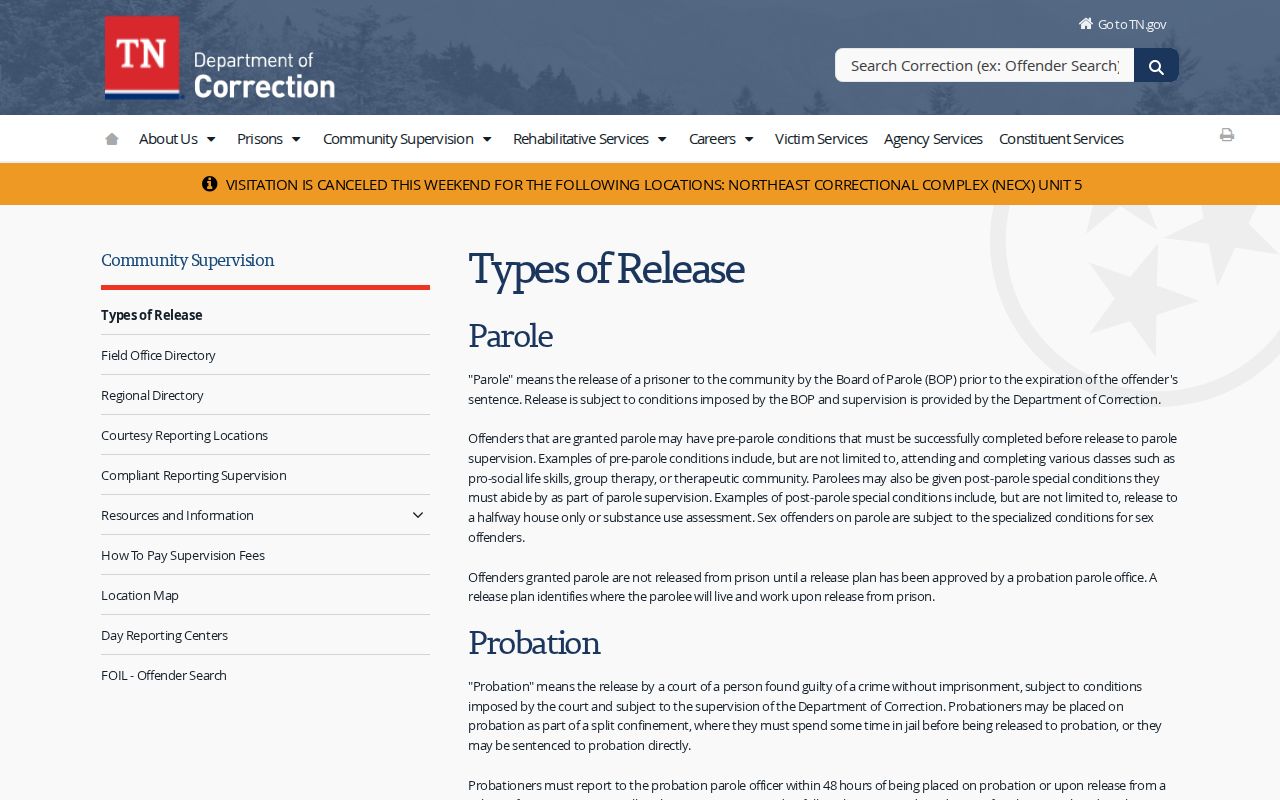
The release route matters because physical departure, community supervision, and final sentence expiration can occur on different dates.
Tennessee Credits Changed in 2024
A sharp statutory change applies to certain newer cases. For a sentence longer than two years for an offense committed on or after July 1, 2024, § 41-21-236 makes sentence-reduction credits reduce the time to parole eligibility, but not the sentence-expiration date. The offense date controls. The day a person searches FOIL does not decide which framework applies.
This distinction explains why FOIL can show a Release Eligibility Date and a later Sentence End Date without contradiction. Credits may move the eligibility milestone while leaving the expiration endpoint in place. For shorter sentences or offenses committed before that date, the statute defines credits differently, subject to all other controlling law.
That Tennessee-specific rule is more precise than saying “good time shortens the sentence.” In a qualifying post-July 2024 case, the credit affects when parole may be considered, not when the imposed term expires. A favorable parole decision can still require programs, plan approval, and a certificate. A denial may lead to a later hearing date.
Note: Always match the offense date and sentence length to current law before explaining how a credit affects either FOIL date.
Tennessee Release Eligibility Limits
Tenn. Code Ann. § 40-35-501 does not create one simple percentage for every Tennessee inmate projected release date. It starts with sentence and offender classifications, then applies offense-specific and date-specific provisions. Some listed offenses committed on or after dates in 2021 or 2022 require service of 100 percent of the sentence without reduction by sentence credits. In some provisions, credits may aid privileges or classification but cannot reduce the term.
Other sections use 85-percent eligibility points with credit limits. Life terms and provisions involving firearm, violent, sexual, child-victim, trafficking, impaired-driving, and other offenses have their own rules and time windows. For offenses committed on or after July 1, 2024, several provisions reflect the newer split between parole eligibility and sentence expiration. Eligible credits may reduce the percentage served before eligibility, often within a 15-percent cap, while expiration stays unchanged.
Concurrent sentences run at the same time, while consecutive sentences run one after another. Pretrial jail credit can also affect the official computation. Discipline may reduce earned credit. Later court papers can correct or alter sentence data. These details are why TDOC's current computation and the judgment should be used instead of an informal calendar estimate.
Why Tennessee Release Dates Move
A date can change for reasons that have nothing to do with an error in the search system. FOIL expressly warns that added court documents may affect calculations. A new judgment, amended order, or corrected credit can change the state timekeeper's data. Conduct and program credits may be earned, reviewed, or lost. A Board decision can alter the likely path without rewriting the sentence-end date.
| Change | Possible result |
|---|---|
| New court document | TDOC recalculates from a judgment, order, or corrected sentence record. |
| Credit award | An eligible release or parole milestone may move under the governing statute. |
| Credit removal | Discipline or review may push an eligible milestone later. |
| Parole grant | Release may become possible after required programs, plan approval, and certificate issuance. |
| Parole denial | A later hearing may be set while the sentence computation continues. |
| Detainer or hold | The person may leave TDOC in another agency's custody rather than enter the community. |
| Sentence alignment | Concurrent or consecutive terms change the combined computation. |
The Board reports that TDOC certifies eligibility before the Board schedules a hearing. After a grant, the sequence can continue through ordered programs, release-plan approval, certificate issuance, and physical release. Each event creates a record, and no single milestone should be presented as the final date too early.
Confirm a Tennessee Release Date
Near an expected departure, check FOIL again and compare its fields with the judgment and any Board record. The Tennessee Department of Correction home page remains the agency hub for current policies and official service links.

Agency sources should control when an old saved result conflicts with a current TDOC record or later court paper.
Tennessee SAVIN through VINELink can add a pending-release or custody-change alert. TDOC describes notifications for location, custody status, transfers, sentence expiration, release, and parole eligibility. Alerts are useful, but the underlying agency record remains the proof source. Registration and event limits are explained on the VINELink Release Check page.
When FOIL does not show enough detail, use the TDOC archived-record request route. Ask for a defined record, such as the sentence computation, release authorization, release certificate, or discharge document. Supply the full name, TOMIS number, date of birth, a date range, and a clear description. TDOC says archive-search charges, if any, are quoted after the search, so no advance payment should be sent.
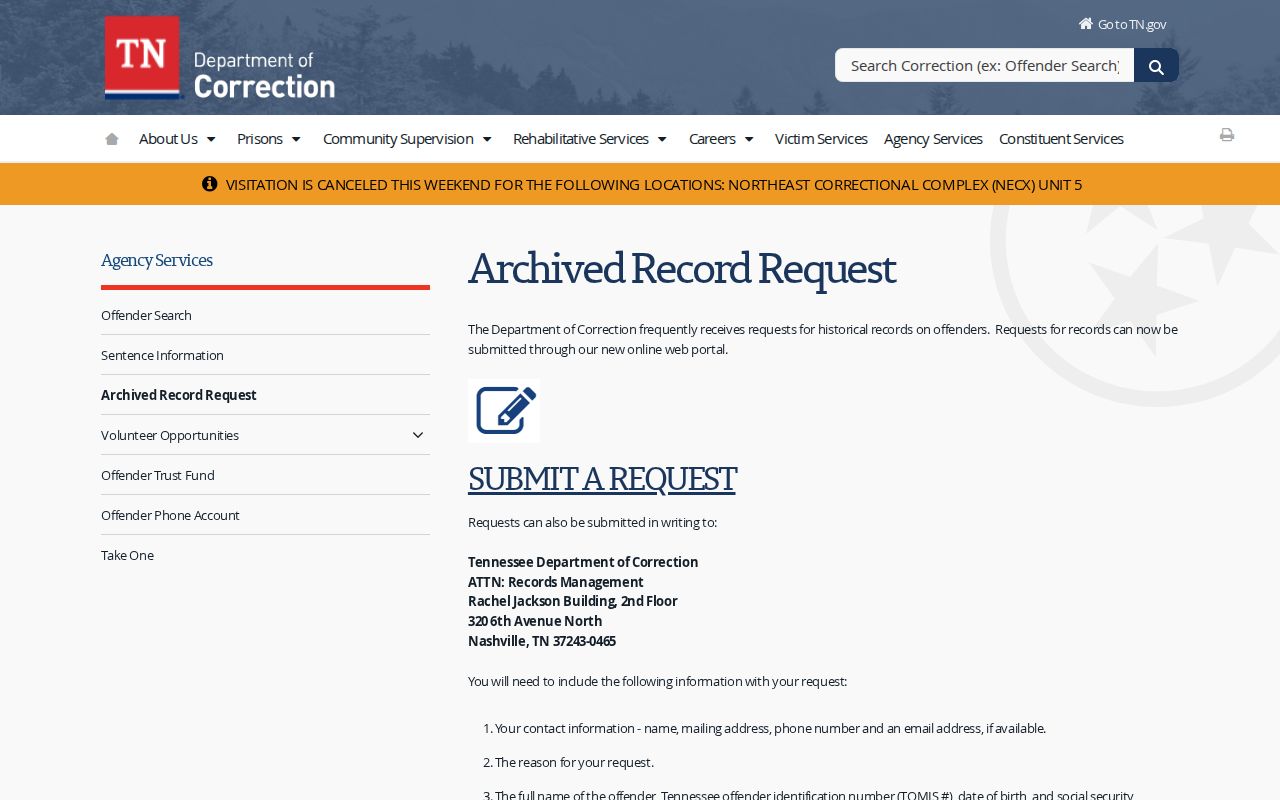
The formal request provides a source-record path when an online date is not enough for the question being asked.
A county case must be confirmed with the county jail and trial clerk. A federal case belongs with the Bureau of Prisons. A detainer release requires the receiving custodian's record as well as TDOC's departure paperwork. The best answer identifies both the date and what that date means: eligibility, planned release, physical transfer, sentence expiration, or final discharge.